Sojourner
Join the beta

Comparison
Sojourner vs Fitbod: a plan you choose, or workouts built for you
Fitbod and Sojourner both tell you what to lift. Fitbod builds each session for you, varying exercises and loads with its own model. Sojourner follows a plan you choose and applies one rule you can read, showing the reason on every set. Which suits you depends on whether you want the decisions made for you or explained to you.
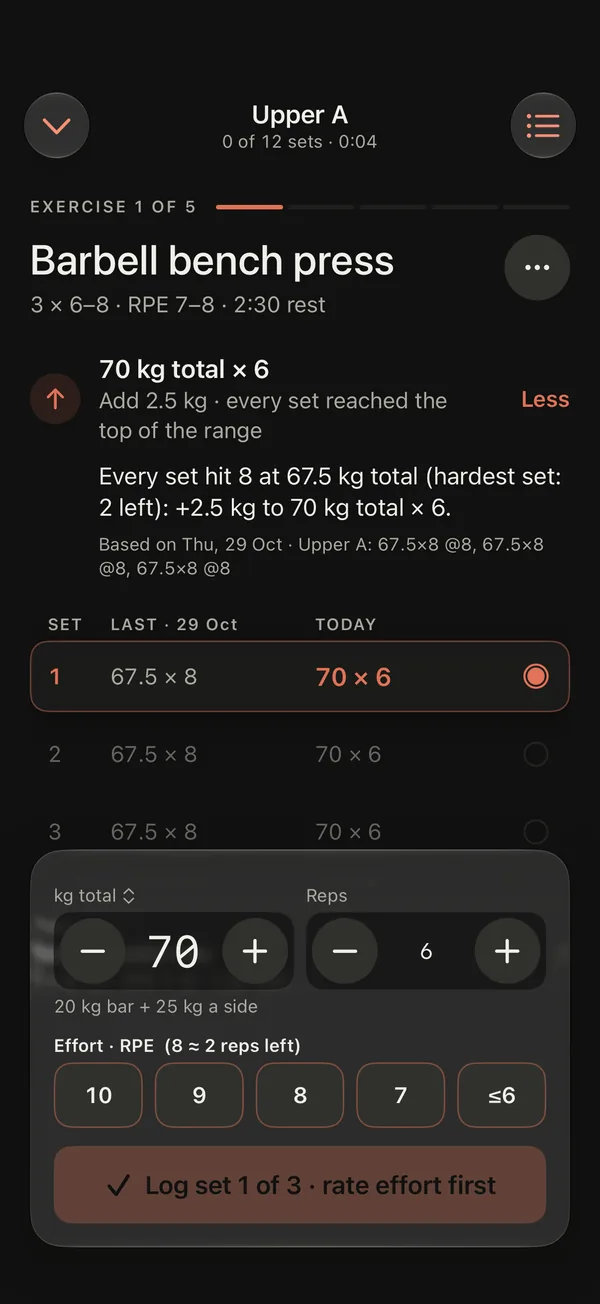
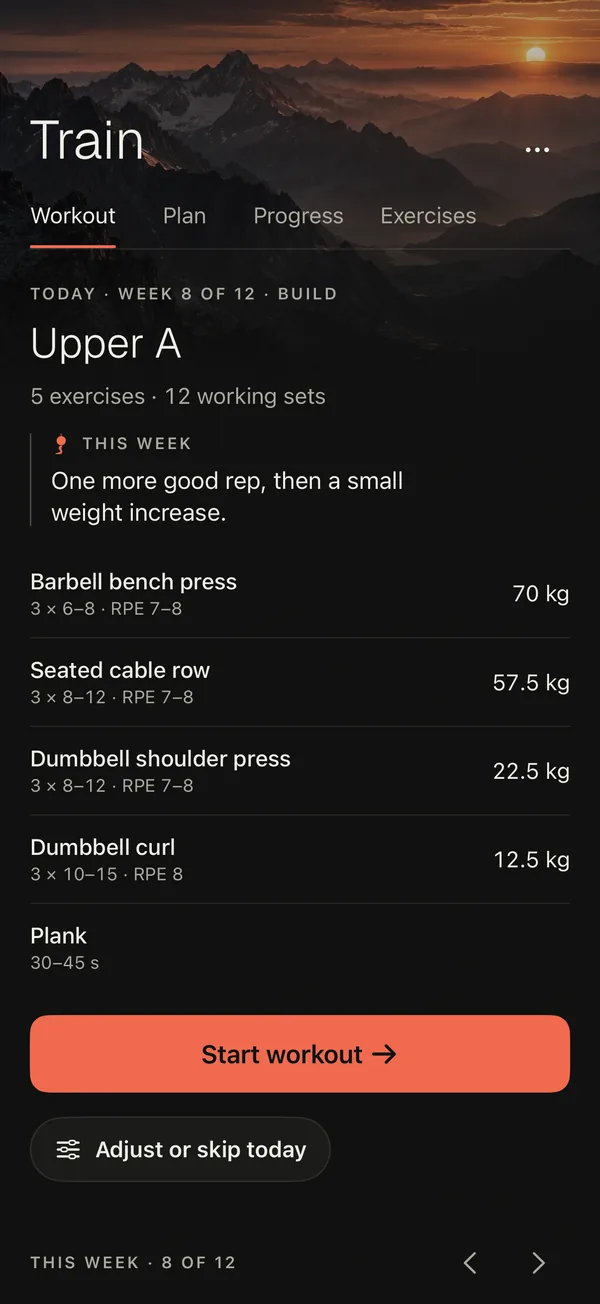
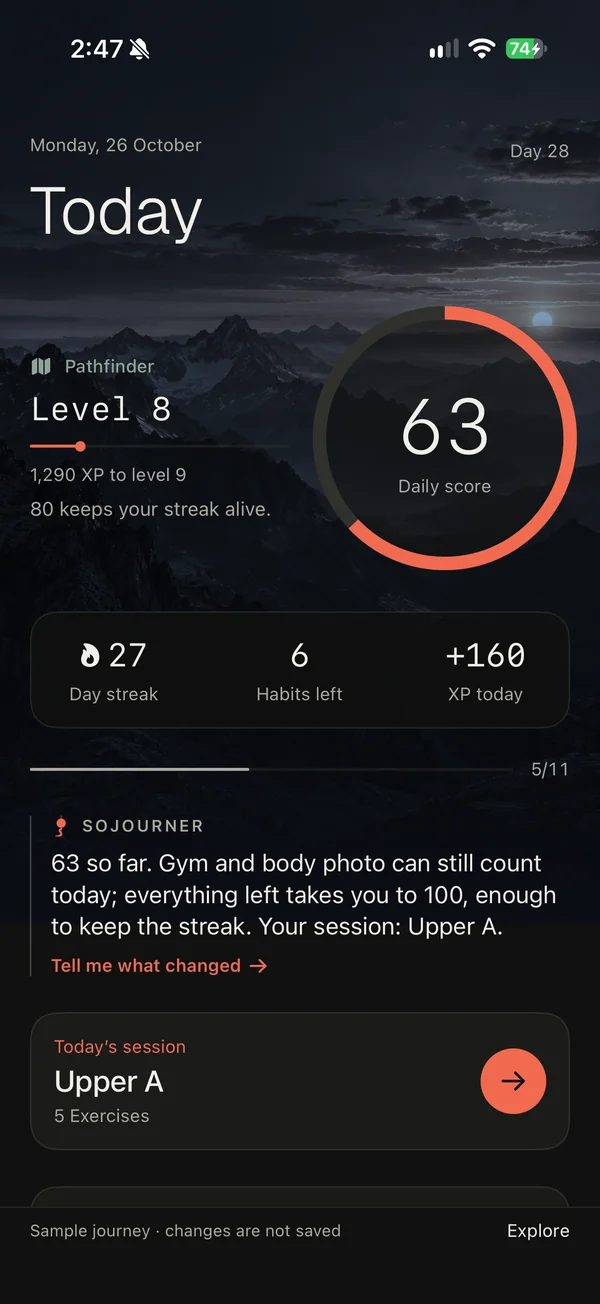
Actual app · sample journey
We make Sojourner, so read this as one side's view. Everything about Fitbod here comes from its own App Store listing, read on 15 November 2026. Check the current listing before you decide.
01
At a glance
| Fitbod | Sojourner | |
|---|---|---|
| Your workouts | Built for you: "each training session is custom-built for your fitness level and equipment" | A plan you choose: ten 8-week starting plans, or your own from a spreadsheet. Every value editable. |
| The next weight | "AI-generated recommendations", varying exercises with "non-linear periodization" | Double progression: reps first, then your exercise's own weight step, with the reason shown on every set |
| Exercise library | 1,000+ exercises with multi-angle videos | 366 exercises to plan from; 871 guides with photos and steps that work offline |
| Price | $12.99–$15.99 a month or $79.99–$95.99 a year, with a free trial | Free during the beta |
| Privacy label | Data used to track you: usage data. Linked to you: health and fitness, contact info, user content, identifiers, usage data, diagnostics. | Data Not Collected. No account. |
| Phones | iPhone and Android; Apple Watch and Wear OS | iPhone with iOS 26 or later; optional Apple Watch app. Android in development. |
| Track record | 4.8 stars from about 290,000 ratings; Apple Editors' Choice | New: a public beta on TestFlight |
02
Choose Fitbod if
You want each workout decided for you
With variety built in, and you're happy for its AI to make the calls.
Your equipment changes a lot
(home one day, gym the next) and you want the session to adapt.
You use Android now
Or you want a large video library and a long track record.
03
Choose Sojourner if
You want to run a plan you chose
And see exactly why each weight goes up, holds or comes down. The rule is public: try it in the double progression calculator.
You don't want an account
Your training stays on your iPhone, and the app's privacy label says Data Not Collected.
You want food and daily habits in the same place
Sojourner turns training, calories, protein and the habits you choose into one daily score.
You miss sessions sometimes
Sojourner shows where a missed session can still fit that week, and nothing changes until you choose. See what to do after a missed workout.
04
How each decides the next weight
Fitbod describes its approach as AI that balances and varies exercises, uses non-linear periodization (so loads and reps are meant to change from session to session) and "learns from your edits" to its recommendations.
Sojourner uses one rule. Keep the weight until every working set reaches the top of your rep range at the planned effort. Then add your exercise's smallest step and go back to the bottom of the range. It only lowers the weight when it fails the bottom of the range, and each set says which of those happened. Neither approach has been tested against the other in a study.
05
Switching
Sojourner can import a plan from a spreadsheet (share its CSV or paste its rows). It imports workout history from Hevy and Strong exports, not from Fitbod. Start with your current working weights and let the reps take it from there.
Sojourner: Habits & Training
See the next weight, and why.
Sojourner suggests each weight from your last session and tells you the reason. Free iPhone beta on TestFlight, no account.
TestFlight public beta · iOS 26 or later · Android in development